



Electro vs Warehouse: Which Is Better for Electronics Shopify Stores?
Electro wins on comparison tooling and price for most electronics stores. Warehouse only pulls ahead on huge, multi-thousand-SKU catalogs with B2B bulk-ordering needs.
Short answer: Electro is the better pick for most electronics stores. It ships a native product comparison tool and spec-attribute filtering, features Warehouse doesn't have at any price. Warehouse is the better pick in one specific case: a huge, multi-thousand-SKU catalog where raw filtering depth and B2B quantity rules matter more than spec comparison. Here's the full trade-off.
Electro and Warehouse keep showing up next to each other because both rank in Shopify's Electronics category. That proximity makes them look like two versions of the same theme. They're not. Electro was built around one behavior: electronics shoppers compare specs before they buy. Warehouse was built around a different problem entirely: large catalogs, in any store type, need deep filtering and mega menus to stay navigable. One of these problems is electronics-specific. The other isn't, and Warehouse's own positioning doesn't claim it is.
Comparison Table
| Theme | Price | Rating | Built for | Comparison tooling |
|---|---|---|---|---|
| Electro | $300 | 99% (90 reviews) | Electronics specialist | Native comparison tool, 3 filter types incl. spec attributes |
| Warehouse | $320 | 84% (325 reviews) | Large catalogs (any store type) | None, advanced filtering and sorting only |
Both data points were pulled live from each theme's Shopify Theme Store listing on August 17, 2026. Prices and ratings move month to month. The feature gap in that last column doesn't. It's structural, and it's the actual reason to pick one over the other.
Electro at a Glance
Electro is built specifically for electronics and tech merchants. It ships a native product comparison tool, so shoppers can put two or three products side by side, specs and all, without leaving the page. Pair that with three filter types, including attribute-based filtering for things like RAM, wattage, or screen size, and Electro is built around the exact moment an electronics buyer is stuck on: is this the right spec fit, or do I need to check somewhere else.
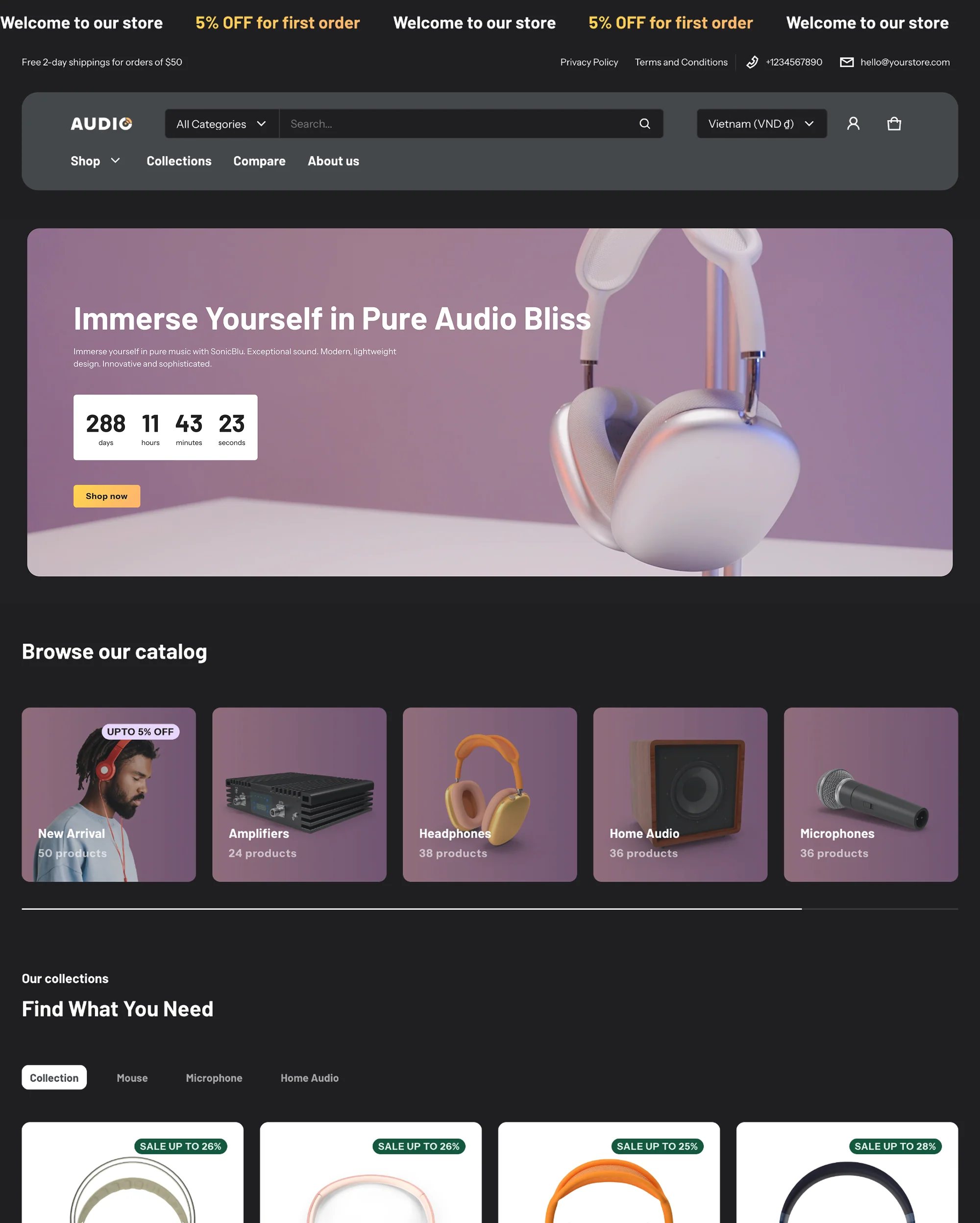
At $300, Electro runs 1,000+ merchant stores and carries a 99% positive rating across 90 reviews, both verified live as of August 2026. That's a specialist feature set backed by a specialist rating, not a general theme that happens to rank in the Electronics category.
Warehouse at a Glance
Warehouse is developed by Maestrooo and positioned explicitly for large catalogs, in any store type, not electronics specifically. It ships advanced filtering and sorting, multi-level mega menus, and quantity rules built for B2B and Shopify Plus stores. Its own tagline reads "Built for big catalogs and bold tech merchandising." It never mentions specs, attribute filters, or comparison.
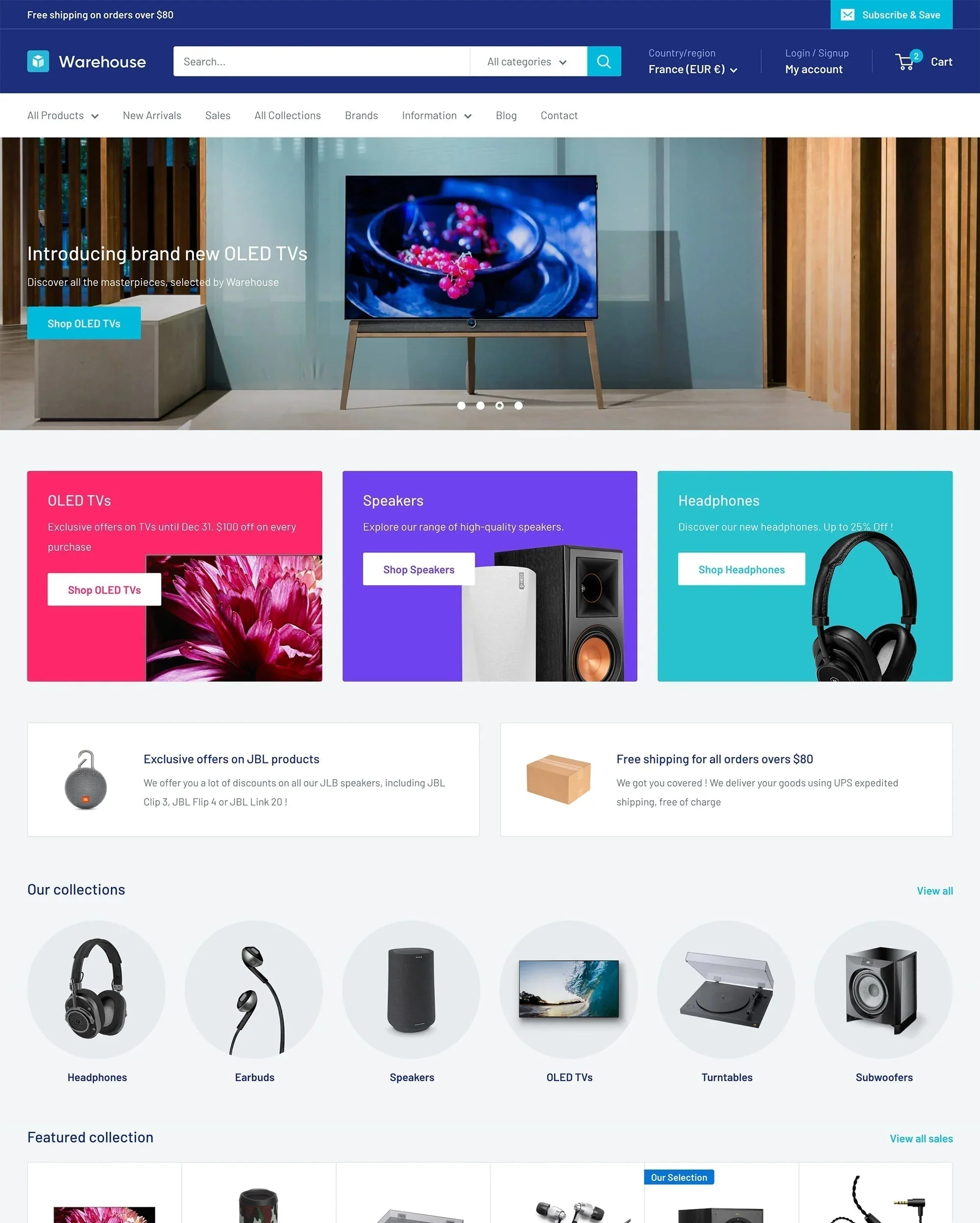
At $320, Warehouse costs $20 more than Electro. It carries an 84% positive rating across 325 reviews, the largest review base of the two themes but the lower rating. Warehouse currently ranks around #8 in Shopify's Electronics category, live as of August 17, 2026, a plausible pick for electronics merchants with very large SKU counts, not because it was built for electronics.
Head-to-Head: The Real Trade-Off
Strip away the price gap and the rating gap, and the decision comes down to one question: does your store need a comparison tool, or does it need to handle a massive catalog?
Comparison tooling. Electro ships a native comparison tool and spec-attribute filtering out of the box. Warehouse ships neither. If your customers are opening a second tab to check a competitor's spec sheet before they buy from you, that's the gap Electro closes and Warehouse doesn't.
Catalog depth. Warehouse's advanced filtering, sorting, and multi-level mega menus are built to keep a five-thousand-SKU catalog navigable. Electro's three filter types cover tag, attribute, and price, solid for a focused electronics catalog, but not purpose-built for navigating tens of thousands of SKUs across dozens of subcategories.
B2B and bulk. Warehouse ships quantity rules built for B2B and Shopify Plus stores. Electro doesn't have a native B2B or bulk-ordering feature set. If wholesale accounts and bulk orders are a real part of your business, that's a Warehouse strength Electro doesn't match.
Price. Electro is $20 cheaper. Not a large gap on its own, but it means you're not paying more for a theme that ships fewer electronics-specific features.
Rating. Electro's 99% positive rating outpaces Warehouse's 84%, though Warehouse's 325 reviews is a larger sample than Electro's 90. Both numbers are verified live as of August 2026.
None of this makes Warehouse a weak theme. It makes Warehouse a theme built for a different problem than the one most electronics buyers create on a product page.
When Warehouse Is Genuinely the Better Pick
If you're running a huge, multi-thousand-SKU catalog, distributing dozens of brands, or managing wholesale accounts that place bulk orders through Shopify Plus, Warehouse earns its shelf space. A distributor reselling thousands of accessory SKUs across multiple brands needs deep mega menus and fast filtering more than it needs a comparison tool sitting on individual product pages. Quantity rules built for B2B accounts solve a real operational problem that Electro doesn't address at all.
This is a genuine trade-off, not a consolation prize. If your bottleneck is catalog navigation and bulk order processing, not spec comparison, Warehouse's $20 premium and lower rating are worth weighing against what it actually gives you: raw depth at scale.
When Electro Is the Better Pick
If your buyers compare before they purchase, laptops by RAM and battery life, power banks by wattage, cameras by sensor size, Electro is built for exactly that moment. The buyer path here is predictable: shortlist a few options, compare specs side by side, confirm the fit, then buy. A theme that skips the compare step is skipping the step that actually decides the sale.
Electro's native comparison tool keeps that decision on your page instead of sending shoppers to check a competitor's spec sheet in a second tab. Attribute-based filtering means shoppers can narrow by the exact spec they care about instead of scrolling through a generic collection grid. And because the comparison tool ships built in, there's no third-party app to manage, no extra subscription, and one less integration that can break the next time Shopify pushes a platform update.
This is the fit for most general electronics and gadget stores: phones, laptops, smart home devices, wearables, cameras, audio gear, anywhere a shopper weighs specs before checking out.
Verdict: Decision Checklist
- Selling spec-driven electronics where buyers compare before they purchase: pick Electro.
- Running a huge, multi-thousand-SKU catalog, with B2B or Plus accounts placing bulk orders: pick Warehouse.
- Not sure which describes your store: look at how customers actually shop your product pages today. If they're opening a second tab to check a spec sheet before buying from you, that's Electro's problem to solve. If they're getting lost trying to navigate ten thousand SKUs across fifty subcategories, that's Warehouse's.
Price isn't the tiebreaker here. Warehouse costs more and rates lower, so a lower price isn't the reason to default to Electro either. The buying behavior on your product pages is the reason.
FAQ
Is Warehouse a good Shopify theme for an electronics store? It can be, if your priority is catalog size over spec comparison. Warehouse offers advanced filtering, mega menus, and B2B quantity rules, and it ranks live around #8 in Shopify's Electronics category as of August 2026. It has no product comparison tool and no spec-attribute filtering, so if your customers weigh specs before buying, Electro is the closer fit.
What's the main difference between Electro and Warehouse? Electro is built specifically for electronics buying behavior, with a native comparison tool and spec-attribute filtering. Warehouse is built for large catalogs in any store type, with advanced filtering, mega menus, and B2B quantity rules, but no electronics-specific feature at all.
Does Warehouse have a product comparison tool? No. Warehouse ships advanced filtering and sorting but no native side-by-side comparison tool and no spec-attribute filtering. Electro ships both.
Is Warehouse cheaper than Electro? No. Warehouse costs $320, Electro costs $300. Electro is $20 cheaper and carries a 99% positive rating versus Warehouse's 84%, both verified live as of August 17, 2026.
Why does Warehouse rank in Shopify's Electronics category if it isn't electronics-specific? Likely because electronics merchants with very large catalogs pick it for the filtering depth, not because its feature set was built around electronics buying behavior. Warehouse's own tagline is "Built for big catalogs and bold tech merchandising," with no mention of specs or comparison.
Should a small electronics store with a focused catalog pick Warehouse for the B2B features? Only if B2B quantity rules and bulk ordering are an active part of the business. If the catalog is a few dozen or a few hundred carefully chosen products and the buying behavior is spec comparison, Warehouse's B2B tooling and mega-menu depth solve a problem that store doesn't have.
See Electro for Yourself
If your customers compare specs before they buy, Electro is built for that exact moment on the page. eComX runs this playbook across 1,000+ electronics stores already, so the comparison tool isn't new, it's the reason merchants pick Electro in the first place. eComX also runs a free trial on every theme, so you can preview the comparison tool and attribute filters on your own catalog before payment triggers on publish. Explore Electro on eComX to see it live.
Want the full field, not just these two? Read the Electro vs Warehouse vs Impact roundup for every option worth considering in 2026. Selling audio or entertainment gear specifically? Read Electro vs Impact for that head-to-head.
More from the blog
Ready to convert more?
Stop leaving revenue on the table.
Your theme is the highest-leverage conversion tool you have.