


Fashion Shopify Stores: Mobile-First Gen-Z Conversion Benchmarks (2026)
No source publishes a Gen-Z conversion rate. Here's what the evidence does show about mobile-first fashion buyers: the mobile conversion gap, apparel PDP gaps from Baymard, returns, speed, and checkout.
Check your own analytics right now. If you sell apparel, most of that traffic is already on a phone. That's not a Gen-Z trend story. It's just where fashion shopping happens now.
Short answer: mobile owns fashion traffic, but it still converts worse than desktop. The gap is mostly fixable friction on the product page and at checkout, not a mystery about what young shoppers want.
One honest caveat before the numbers. No credible public source publishes a "Gen-Z conversion rate." Nobody isolates that cohort's purchase rate in a way that survives a direct check of the source. What does exist is solid data on the mobile-first shopper, the closest real proxy, plus a handful of findings on 18- to 29-year-olds (the nearest age bracket published) on where they discover product and who influences the decision. This post uses the mobile-first shopper as the lens, and names the age-bracket data separately, so you're not building a strategy on a number nobody actually measured.
Benchmark 1: Traffic Is Mobile. Conversion Isn't (Yet)
Contentsquare's 2026 Digital Experience Benchmark, built from 99 billion sessions across 6,500+ sites, puts retail's 2025 traffic split at 77% mobile and 23% desktop (Contentsquare, 2026). Fashion isn't exempt from the shift underway. Within the same benchmark, the Fashion sub-industry saw a 15% drop in mobile session volume, part of a broader 14% retail-wide pullback in overall traffic, not proof mobile is losing ground to desktop (Contentsquare, 2026). And 54% of Fashion & Specialty Retail traffic is paid, not organic, in the same dataset (Contentsquare, 2026). That matters: you're paying to bring a cold visitor to a mobile screen.
Here's the part that should worry you more than the traffic split. Across the same 99-billion-session dataset, desktop converts 74% higher than mobile, cross-industry, not fashion-isolated (Contentsquare, 2026). In absolute terms, that's roughly 2% on mobile web against 3.4% on desktop (Contentsquare, 2026).
Salesforce's Shopping Index tells a similar story from transaction data instead of session data. In Q1 2024, mobile drove 78% of global retail traffic but only 66% of orders, general retail, not fashion-specific (Salesforce, 2024). Two vendors, two methodologies, the same pattern: mobile brings the visits, desktop still closes more of them.
What We Know About Gen Z Shoppers, Specifically
Most of what gets repeated as "Gen Z data" doesn't survive a direct check of the source. Here's what does.
Pew Research surveyed 6,034 U.S. adults in July 2022 and found 54% of 18-29 year-old social media users say influencers have affected what they buy, "a lot or a little" (Pew Research Center, 2022). Among women in that age group, it's 62%, and half of women 18-29 say they've bought something directly after seeing an influencer's post, against 28% of men the same age (Pew Research Center, 2022). That data is from 2022. It's the most recent gold-standard survey on this question, so treat it as directionally current, not brand new.
On where that influence turns into a sale: eMarketer puts TikTok Shop at 18.2% of U.S. social commerce in 2025, worth $15.82 billion, up 108% year over year, projected to climb to 24.1% by 2027 (eMarketer, 2025). eMarketer attributes that growth to Gen Z and millennial adoption but doesn't publish an exact age-split percentage, so don't let anyone hand you one.
Put those together and the takeaway is simple. Discovery happens off your site, on social, often through an influencer. By the time a young shopper lands on your product page, they're already a cold, paid, mobile visitor who made a decision to check you out. Your PDP has to close, not introduce.
Benchmark 2: The Apparel Product Page Gap
Baymard Institute, an independent UX research firm with no theme or platform to sell, has logged over 20,000 hours testing mobile ecommerce and found 62% of sites deliver "mediocre or worse" mobile UX. Zero percent scored "good" (Baymard Institute).
Apparel sites carry their own, more specific gaps, from Baymard's dedicated apparel usability research:
- 82% of apparel sites don't provide sufficient sizing information on the product page (Baymard Institute). Fix: a real size guide with measurements, not just S/M/L, linked directly from the PDP.
- 21% show no on-model image, or only one (Baymard Institute). Fix: multiple on-model shots, ideally with the model's own size labeled.
- 24% show no aggregate "fit" subscore in reviews, alongside star ratings (Baymard Institute). Fix: a runs-small / true-to-size / runs-large rollup, not just a star average.
- 90% miss at least one Baymard-identified best practice for apparel PDPs entirely (Baymard Institute). Fix: audit your own PDP against Baymard's published checklist before building anything else.
These aren't preference gaps. They're the exact information a mobile shopper needs to decide, on a screen too small to zoom into a size chart buried three tabs deep.
Benchmark 3: Returns Start on the Product Page
Returns aren't a shipping problem. They're a product-page information problem that shows up later.
Narvar's 2019 survey, reported by Retail Dive, found wrong size, fit, or color caused 34% of Amazon returns and 46% of returns at other retailers (Narvar via Retail Dive, 2019). The same study found 48% of U.S. shoppers "bracket," buying multiple sizes or colors with the plan to return what doesn't fit (Narvar via Retail Dive, 2019). That's a 2019 study, so treat the exact percentages as dated, though the behavior itself hasn't disappeared.
Narvar's more recent State of Returns report puts current numbers on the scale of the problem: 39% of U.S. consumers return something online at least once a month, and $744 billion in merchandise was returned in the U.S. in 2023 (Narvar, 2024). That figure is general retail, not fashion-specific, but apparel is one of the categories most exposed to it, since fit can't be verified before delivery.
Both studies point back to the same fix as the PDP gap above. Better sizing information and more on-model imagery don't just lift conversion, they cut the returns that eat your margin after the sale.
Benchmark 4: Speed and Checkout
Google commissioned an independent study from 55 and Deloitte, monitoring 37 U.S. and European retail sites over 30 days with no other UX changes during the test window. The finding: a 0.1-second improvement in mobile page speed produced an 8.4% lift in retail conversion and a 9.1% lift in the rate shoppers moved from product page to add-to-cart (Google/Deloitte, "Milliseconds Make Millions," 2019). That study is from 2019. It's still the most rigorous public test of this specific relationship, so cite it with the year attached.
On checkout itself, Shopify's own blog cites a 2023 third-party study claiming Shop Pay can lift conversion up to 50% compared to guest checkout (Shopify, citing a 2023 study). That's a vendor claim about Shopify's own product, not an independent finding, and it's platform-wide, not fashion-specific. Worth knowing if you're already on Shopify, not worth treating as an apparel benchmark.
Speed and checkout friction compound with everything above. A slow PDP costs you the sale before a shopper ever reaches your sizing information.
Mobile-First Fashion PDP Checklist
Run your own product page against this before touching anything else:
- Real size guide with body measurements, linked from the PDP, not buried in a footer page
- Multiple on-model images per product, with the model's size noted
- Reviews with a fit subscore, not just a star rating
- Accelerated checkout (Shop Pay or equivalent) available above the fold on mobile
- Fast mobile load, tested on your slowest real device, not just a Lighthouse score
- Shoppable UGC or lookbook content, since discovery increasingly starts on social
- Clear, visible returns policy stated on the PDP itself, not just in the footer
Where Blum Fits
Every fix above is something you build regardless of theme. A theme can't write your size guide or shoot your on-model photography. What it can do is give you a layout already built for a fashion buyer, not a generic template you bend into shape.

Blum is eComX's fashion theme, priced at $170 and running on 3,000+ merchant stores. It holds a 99% positive rating across 259 reviews, verified live on Shopify's Theme Store on September 23, 2026. Its Theme Store listing pitches it as an editorial fashion theme built to "inspire, outfit, buy." It ships bold media sections for lookbook-style photography, product hotspots that let a shopper tap directly into a styled shot, and complementary-product logic that surfaces the rest of an outfit next to the item someone's already viewing.
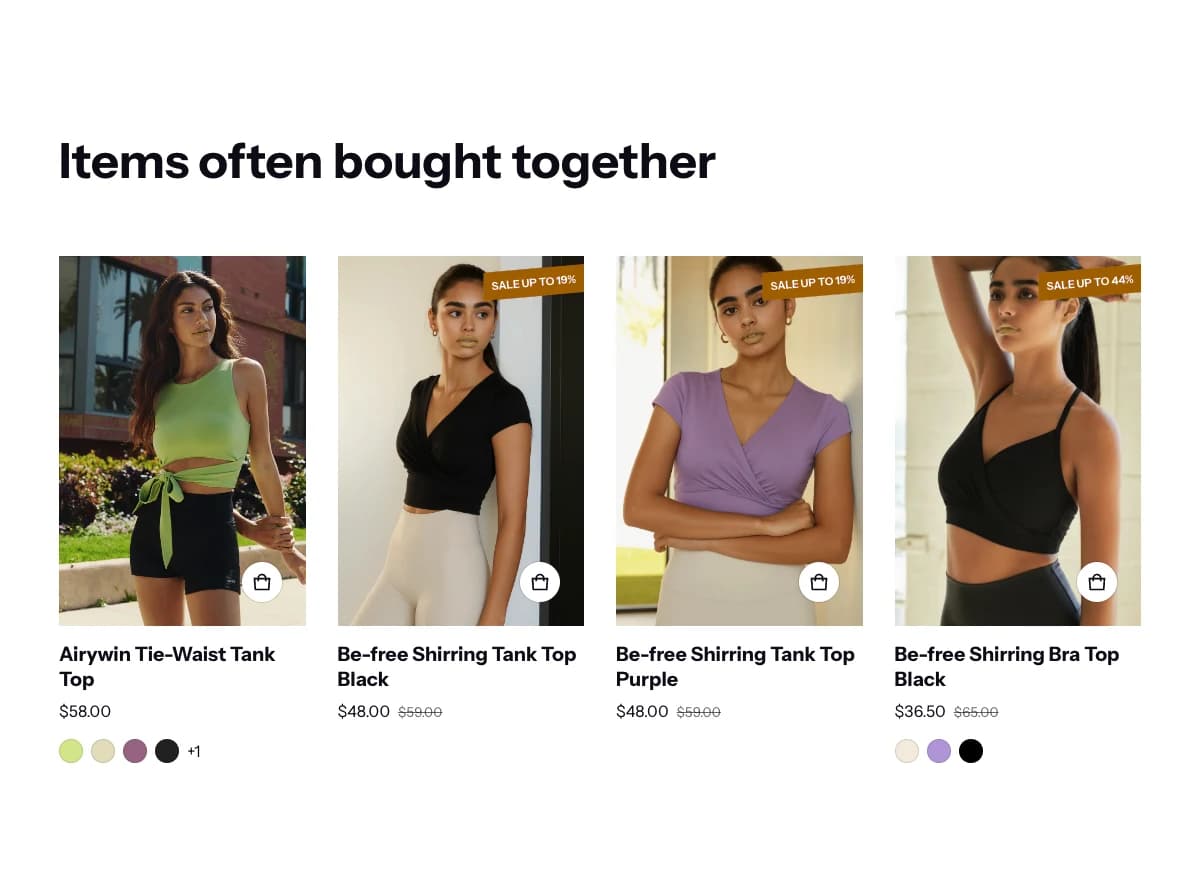
To be direct about what Blum doesn't do: it doesn't write your size guide, shoot your on-model photography, or build your returns policy. Those are yours to fill in. What it gives you is a layout built around how a fashion shopper actually browses. See every section and feature on the Blum theme page.
Takeaways
- Fashion traffic is mobile-first, but mobile still converts meaningfully worse than desktop, a gap two independent vendors both measure in double digits.
- No credible source publishes a Gen-Z-specific conversion rate. Track your own mobile-vs-desktop split instead of borrowing a number nobody verified.
- The real Gen-Z data that exists is about discovery (social, influencers, TikTok Shop), not conversion rate. Your PDP has to close a shopper who already decided to check you out.
- Baymard's independent research shows the fix is unglamorous: sizing info, on-model imagery, and a fit subscore, not a redesign.
- Speed and accelerated checkout compound everything above. Fix the PDP first, then the funnel around it.
FAQ
What's the mobile conversion rate for fashion stores?
No independent source publishes a fashion-specific mobile conversion rate. What's published is a cross-industry retail gap, not a fashion number: Contentsquare's 2026 benchmark states desktop converts 74% higher than mobile, and the same benchmark separately frames the gap as a 40-70% range elsewhere on its own site, so treat both as the same underlying finding stated two ways (Contentsquare, 2026). The honest move is to pull your own store's mobile-vs-desktop conversion split from your analytics rather than borrow an industry number.
How do Gen Z shoppers find fashion brands?
Largely through social, not search. 54% of 18-29 year-old social media users say influencers have affected a purchase (Pew Research Center, 2022), and TikTok Shop alone made up 18.2% of U.S. social commerce in 2025 (eMarketer, 2025).
What causes most fashion returns?
Wrong size, fit, or color, per Narvar's 2019 survey: 34% of Amazon returns and 46% of returns at other retailers (Narvar via Retail Dive, 2019). Better sizing information and on-model imagery address this at the source.
Does page speed affect fashion conversion?
Yes, though the clearest evidence is retail-wide, not fashion-specific: a 0.1-second mobile speed improvement produced an 8.4% conversion lift and a 9.1% lift in add-to-cart rate in a Google-commissioned 2019 study (Google/Deloitte, 2019).
See How Blum Handles a Mobile-First Fashion Buyer
Fix your sizing content and photography first. Those moves are free. When you're ready for a layout built around an editorial fashion buyer instead of a generic grid, explore Blum on eComX. Every theme runs on a free trial, so you can preview it against your own product photography before payment triggers on publish.
More from the blog
Ready to convert more?
Stop leaving revenue on the table.
Your theme is the highest-leverage conversion tool you have.